


Stories matter. But they matter not so much because they happened exactly in the way they are told—or at all—but rather because we believe the stories and they in turn shape our sense of the characters.
In 2008, at the age of 71, Fleming Rutledge went to Wycliffe College as a scholar in residence while (now) Bishop George Sumner was still the principal. One of her early appearances was in a homiletics class. After a student preached, Fleming was invited to offer feedback. She paused, considered, and then delivered her verdict:
“Honey, I’m not sure what that was, but it wasn’t a Christian sermon.”
By then, of course, Rutledge had already written multiple books, been ordained for over three decades, and preached around the world. But this story became part of her mythos.
On June 12, I had the pleasure of co-organizing a conference in Fleming’s honor. It wasn’t a farewell. It was a festival.
The purpose of the occasion was threefold: to celebrate the 50th anniversary of her ordination, to announce a fundraising campaign toward a new Fleming Rutledge Chair in Biblical Theology, and to unveil a writing project in her honor. By the end of our first day—well past 9 p.m.—Fleming was just getting warmed up.
During one of the Q&A sessions, someone asked about that “honey” story. Was it true? Did it happen? Fleming retold the tale with her signature Tidewater drawl, crafting each phrase with care. Then, after the punch line, she added with a perfectly timed deadpan:
“I never called her honey.”
The room erupted. The story was true—even if it had been sweetened for effect.
That moment crystallized what so many of us have long felt. Whether among bishops or seminarians, laity or theologians, she draws us in with wit, precision, and a hard-earned authority born of deep conviction.
It began for me the day Fleming slid into my DMs.
Like many others, I had known her through her books—especially The Crucifixion. At the suggestion of my brilliant and wise wife, I had written a liturgy for anyone to use during the pandemic. Months after the liturgy was released into the wild, I was on the platform formerly known as Twitter one day when I saw the notification: Message from Fleming Rutledge.
Thus began a correspondence that shaped my ministry—pastoral, practical, and preaching—in ways I’m still discovering. Over time, the DMs became emails, then phone calls. Eventually, I summoned the nerve and asked her to be my preaching mentor. She said yes.
And in true Fleming fashion, she connected me not only to herself but to others: Jason Byassee, Andrew Kryzak, Kristen Deede Johnson, Justin Crisp. Together we dreamed up a conference. We all had our individual reasons for celebrating her, but we wanted to put something together that demonstrated her vast and varied reach. Justin Crisp, our gracious conference host, dubbed it FlemFest.
Fleming also led me to Amy Peeler. I had long felt that Fleming’s ministry needed to be celebrated in writing. I knew that her influence was more popular outside of her Episcopal tribe. I was aware that she continued to shape the hearts and minds of preachers and pastors across the land.
Dr. Peeler and I began collaborating, envisioning what would become the volume we are co-editing to be published by Eerdmans in 2027: More Anon: Essays in Honor of Fleming Rutledge.
This volume will mark the 50th anniversary of her priestly ordination. It will include 22 essays from voices across the Christian landscape: Anglican, Baptist, Methodist, Presbyterian, Roman Catholic. The contributors come from pulpits and seminaries, from classrooms and pressrooms. Stanley Hauerwas, Will Willimon, Kate Sonderegger, Russell Moore, Joy J. Moore, and others are sharing their work in this volume.
The title takes its cue from Fleming. The first time she signed an email to me “More anon,” I knew it was a phrase to which I would return. It speaks not only of continuation, but of confidence—there’s more to say, and I’ll be saying it. That’s exactly what this book embodies: a chorus of voices echoing hers.
At the conference, she sat front and center—surrounded by friends, her beloved husband, Dick, and multiple generations of Christian leaders who owe her a great debt.
Through her books, sermons, and lectures, Fleming Rutledge has shaped a generation of preachers, theologians, and laypeople. She writes with theological depth and prophetic clarity, bridging the pulpit and the page with unmatched conviction. Her sermons are thunderclaps of grace—fierce, faithful, and always grounded in the cross of Christ.
She has given the church a language for hope in the face of despair and a grammar for grace in a world of judgment. Her influence echoes from Episcopal pulpits to evangelical classrooms, from mainline pews to Reformed seminaries. In a time of shallow spirituality, she has insisted on the God who acts, judges, delivers, and saves.
And perhaps most of all: she has never stopped taking the gospel seriously.
And neither did we, not for a single moment of FlemFest.
My wife, Rebecca, and I were there, along with our 13-year-old son, Jet. Fleming, naturally, was smitten with him. She took him under her wing, signing a book at his request, conversing with him like the two were old friends. I pray it is a memory he will cherish forever. As proud parents, I know we will. After one of the presentations—by a highly regarded theologian—Jet turned to us and said, “That was pretty elementary.” You could almost hear “honey” at the end of his sentence.
That’s the kind of conference it was: theologically thick but unpretentious, sharp but never stuffy, reverent and deeply fun.
We were blessed by the presenters. Andrew McGowan brought his characteristic blend of historical depth and liturgical insight. Kate Sonderegger wrapped us in doctrinal richness that demanded silence. Jason Byassee wove wit and wisdom together with pastoral ease. And Jason Micheli preached the cross with all the defiant joy of someone who has staked his life on it. Each of these four presentations will be included in the volume.
Through the panels and the fortifying coffee breaks, we explored Fleming’s Christology, her apocalyptic imagination, her insistence on the priority of preaching, her focus on the subject of the verbs, and her refusal to tame the gospel.
There was also Evensong—a liturgy shot through with the glory of the cross. I had the humbling joy of preaching, looking out across a room filled with family, friends, and mentors—not least of all, Fleming herself with Dick by her side. The liturgy wrapped words in beauty, the music lifted our theology into doxology.
It was, in the end, not just a conference. It was a gathering of witnesses—people who had been changed by Fleming’s words, who had found courage through her conviction in the gospel of Christ.
And while she was honored she always redirected the admiration. Before the end of the evening, Fleming told us the rest of the story. You see, I was wrong. The legend did not begin with “honey” in 2008. It started one evening after she and Dick put the girls to bed. As they settled down for the evening, Fleming said, “Dick, I want to go to seminary.” This was not part of their plan; they had young children; none of this made logical sense to her. But without hesitation, Dick said yes. Through all the years of ministry, writing, and teaching, it is Dick who constantly supported her, who saw a way when there was no way.
Fleming Rutledge has taught us to preach as if lives depend on it. Because they do.
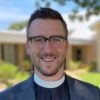
The Rev. Porter Taylor, Ph.D., is rector of Church of the Good Shepherd in Augusta, Georgia. He is the editor of We Give Our Thanks Unto Thee (Pickwick, 2019) and The Wiley Blackwell Companion to Liturgical Theology (2024).
