


Leaving a door open, although a simple action, is a complicated proposition. I don’t mean metaphorically, but truly to unlock a door and structure the life of things inside based on which way the bolt is turned. My wife and I have made several moves in our professional lives, and we would usually join the Episcopal church in the community. We have belonged to cathedrals and to small suburban churches, from low church to Anglo-Catholic. But the most meaningful distinction was not incense or vestments or size of the congregation, but whether the door was unlocked. Some churches were open daily. Many, sadly, were locked tight except for Sunday mornings.
St. Mary of the Hills Church in the mountains of western North Carolina is open, and not only for Sunday morning, but for Daily Office, Feast Day Eucharists, and Evensong. On weekdays the church is open to all—candles lit and altar illuminated. It is an extraordinarily peaceful, contemplative space that draws visitors and church members in, for prayer and respite. What does it take to structure the life of the church to make this possible? And how does that shape the church’s sense of mission and purpose, stewardship and sacrifice?
Not long after we joined St. Mary’s about ten years ago, I found myself occasionally stopping by, on weekday afternoons, to sit in solitude in a pew. I believe my motivation for these visits, at first, was prayer for a solution to a problem or concern in my life. Over time, however, I was drawn to come and sit, without expectation, to be in the presence of God. While I’d attended hundreds of church services in my life, I had never come quietly, at times of my choosing, to sit in a sacred space. Sitting and kneeling without fear, worry, or desire—without an agenda—allowed me to be in the presence of God in a way that was uncluttered by thoughts of myself.
Sacred space—the notion that physical places may be set apart uniquely for worship, personal and corporate prayer, preaching, and sacraments and thereby have some intrinsic holiness beyond functionality—has an equally complicated place in the Christian tradition. The omnipresent God of Israel promised to be present in his Temple, but then the curtain was torn at Christ’s crucifixion. Holiness—a holiness that is redeeming yet not altogether “safe” if one appreciates the practices of the Temple sanctuary—now floods the world. And yet, in promising his sacramental presence in this material world, Christ does, in a way, establish not only times but places where we can draw close to a certain tangible holiness, spaces where we can uniquely experience something of God. Despite moments of iconoclasm, the Anglican tradition has, since the 1662 Book of Common Prayer, provided liturgies for the consecration of sacred space.
Certainly in the Protestant tradition in which I was raised, the church building was considered, when it was considered at all, functional—a place for God’s people, the church, to gather weekly for worship. The church, i.e., the people, utilized a structure that was built almost exclusively (or at least it seemed to me) for Sunday mornings. And once the service was over, the buildings were locked tight, lights off, until the next Sunday. In my formation, locked churches seemed a paradigm for how I came to approach Christianity—as a membership, a box to be checked, good to visit weekly, but then to be locked away for more serious, worldly endeavors.
That unlocked door changed me. My first real experience with sacred space, kneeling quietly at St. Mary’s, made me a different person. I felt, for the first time in my life, that I was where I should be—a human, kneeling and being present before God. In those times, I felt no fear, no need, no hunger, but a sense of completeness. From my experiences, I’ve come to believe that we are made to be in the presence of God. To deny, or be denied his presence, makes us ill. And that opportunity should be available—a resource for God’s people—not merely when we gather on Sundays.
Since those first days at St. Mary’s, my wife and I have traveled as pilgrims to Israel and Palestine, to the holy Christian sites that I had never experienced. This led to a recent pilgrimage to Rome, a place of overwhelming beauty. I knew these places existed—the Church of the Holy Sepulchre, the Church of the Nativity, the Basilica of San Pietro in Vincoli—but that knowledge was not the same as being present in those spaces marked out and set apart by holiness.
My hope is that more churches, more communities of disciples of the Incarnate God who shared life in this material world, will orient their mission to include access to sacred space. Can that be part of our ministry and calling? Could it be that we are called to make sacrifices and leave open and accessible these spaces for other pilgrims to enter, sit, and perhaps kneel and experience God? We live in a broken world; I know there are many barriers to making our churches accessible. Location and danger are real issues and may preclude our priests and vestries from turning that bolt.
After my redemptive experience at the altar, I continued my visits to this sacred space regularly, sometimes with specific needs and fears, often with no desires other than to kneel before God.
Episcopalians in the United States are sometimes accused of being poor evangelists. Perhaps one method of evangelism, a calling and vocation perhaps, is to offer our sacred spaces to any and all who will walk through that unlocked door and in so doing discover a God whose love for them changes them and makes them new in his son, Jesus Christ.
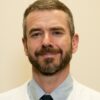
Peter Purcell, M.D., is a vascular surgeon in Blowing Rock, North Carolina, and is affiliated with Catawba Valley Medical Center. With close to 30 years of experience in medicine, he founded a vascular surgery practice in Western North Carolina.
