



Exploring the Financial Parables of Jesus
The Economy of Grace and the Generosity of God
By Keith Bodner
Baker Academic, 181 pages, $25.99
If the parables of Jesus are intended to help us see the inbreaking of God’s gracious reign and key features of the economy this reign establishes, then in Exploring the Financial Parables of Jesus: The Economy of Grace and the Generosity of God, Keith Bodner directs us to see new vistas and familiar terrain with fresh insight.
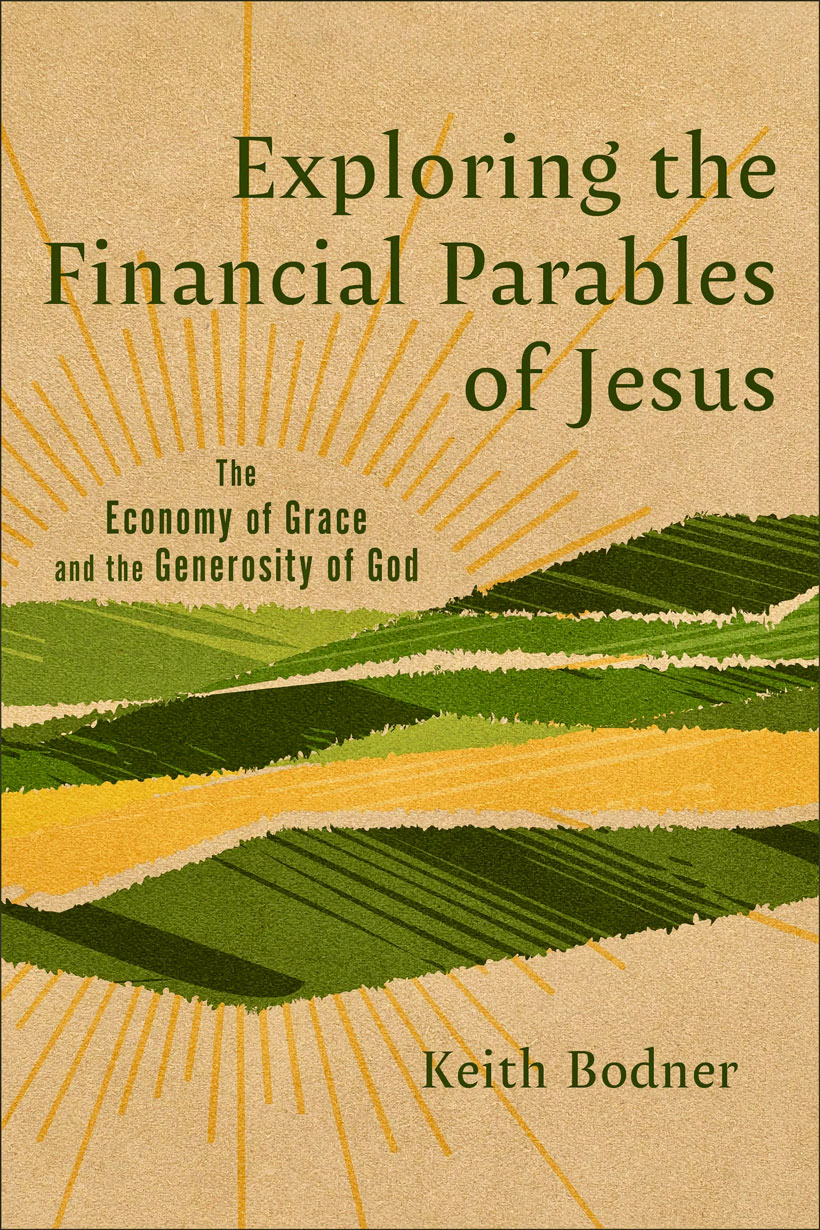 By narrowing his focus to the financial parables of Jesus—like the shrewd manager (Luke 16:1-9) and the talents (Matt. 25:14-30)—in seven succinct chapters and a conclusion, Bodner helps us consider key parables in some depth, while also helping us see his singular theme concerning “how the economy of grace unfolds, along with examples of our optimal responses to divine generosity.” The overall effect of his focus on the financial parables is a rich portrayal of God’s grace and an invitation to imagine the different demands that the economy of grace might make on us.
A strength of this book is the way Bodner situates the different parables alongside Old Testament narratives and relates the financial parables to each other. Take, for example, Bodner’s discussion of the parable of the prodigal son in Luke 15. Bodner discusses the younger son’s rebellious forsaking of his father, subsequent reckoning and repentance, and eventual return to his father’s household mirrors Jacob’s flight from home—after deceiving Esau—and his eventual return.
He also writes about King David’s forced evacuation of his royal palace, as his son Absalom tries to wrest the throne from his father, before eventually God makes it possible for David to return. Along the way of his discussion of the parable of the prodigal son, Bodner also relates it to other financial parables, including the parable of the good Samaritan, the parable of the rich barn builder, and the parable of the rich man and Lazarus. In doing so, Bodner highlights how the parable of the prodigal son resonates with other family narratives found in Scripture, as well as the other financial parables more generally, helping us to see the ubiquitous patterns of human behavior and the deep human need for God’s grace.
Bodner’s exposition demonstrates how the financial parables often defy the usual logic, patterns, and expectations of economic life, thereby revealing God’s generosity and the graciousness of the divine economy in sharp relief. This is best seen in the parable of the vineyard workers in Matthew 20 that Bodner discusses in a chapter titled “A Widow and the Workers.”
The workers who join the work in the vineyard at the end of the day are paid the same amount (a day’s wage) as those who worked all day. Yes, those who began their work at the beginning of the day agreed to the wage they were paid; however, the overall economic outcome that all workers are paid the same wage irrespective of how long they have worked upends standard economic logic and the expectations that economic justice requires those who work longer doing the same work should be paid more.
In considering this result, we are left, on the one hand, with the stunning realization that the vineyard owner is extremely generous to those workers who joined at the 11th hour—and that God shows the same generosity with us. On the other hand, we are left wondering how this result might relate to contemporary economic affairs—to the human activities of producing, consuming, saving, investing, and remunerating—in other words, whether the divine economy should shape the human economy. Bodner does not resolve this wondering; it is a tension I felt throughout the book.
This is a helpful, introductory resource for those wanting to learn what the financial parables of Jesus teach us about God and his gracious ways. Its succinct chapters—laced with contemporary illustrations from literature and film—make it a good candidate for use in small-group studies, while the judicious use of footnotes and longer bibliography provide signposts for those wanting to deepen their understanding. Those who read this book will encounter afresh the God of grace based on the parables of Jesus.

The Rev. Dr. Nathan McLellan is CEO and teaching fellow at Venn Foundation, an educational institution in Aotearoa, New Zealand.
