


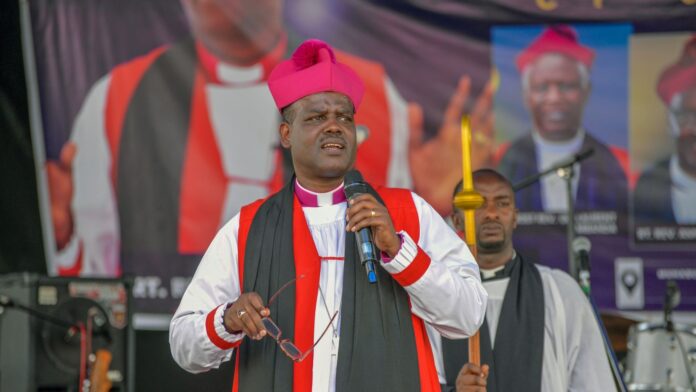
Former Rwandan Bishop Samuel Mugisha Mugiraneza, said by many of his former flock and several of his fellow bishops to be unfairly imprisoned, will now have his day in court this week. A hearing on his appeal of a sentence of three and half years in prison for pasturing his cattle on church property is scheduled for March 18.
“Mugisha was the people’s bishop, loved by everybody in the church and communities beyond the Shyira Diocese, but Archbishop Mbanda did not want him,” one of Mugisha’s former priests told The Living Church.
The Anglican Church of Rwanda’s powerful primate, Archbishop Laurent Mbanda—also the chairman of the Global Fellowship of Confessing Anglicans (Gafcon)—is also blamed for Mugisha’s downfall by one of Rwanda’s most senior bishops, the Rt. Rev. Alexis Bilindabagabo.
The former Bishop of Gahini accused Mbanda of hypocrisy and canonical malfeasance in his handling of Mugisha in a controversial open letter last October. In an ensuing row covered in the Rwandan press last fall, the primate lashed out at Bilindabagabo and three fellow retired bishops who spoke out to support his criticisms, claiming that retired bishops should keep silent in church affairs.
Some say that the confrontation has seriously divided the Rwandan church, with fallout including a delayed process for electing Mugisha’s successor, uncertain plans for diocesan projects, and two lawsuits filed by Shyira church leaders against the primate for abuse of power.
Mugisha’s Sudden Fall
Bishop Samuel Mugisha led the Anglican Church of Rwanda’s Diocese of Shyira for nearly seven years, succeeding Archbishop Mbanda when he became primate in 2018. Facebook posts published by the diocese in 2023 and 2024 detail services with hundreds of confirmations and dedications of several new churches. Mugisha visited numerous evangelical Anglican congregations in the United States and England sharing the news of his diocese’s rapid growth and raising support for its ministry.
Under Mugisha’s leadership, construction began in June 2024 on the Asante Business Center, a multistory retail and office center in Musanze City. The high-profile project promised to generate revenue for mission projects across northern Rwanda.
Many were speaking of the energetic former seminary professor as a likely successor to Mbanda, who is set to retire this October.
But Mugisha’s ministry unraveled quickly after he dismissed two diocesan priests, Charles Kubwayo and Jean Baptiste Kabaragasa, in August 2024. Kubwayo, originally hired by Mbanda, had served as the Diocese of Shyira’s executive secretary for more than a decade.
According to Rwandan media outlet IGIHE, Kubwayo and Kabaragasa had publicly accused Mugisha of personally benefiting from contracts associated with the business center’s construction and food supplied to the diocese’s nursery schools. They also claimed that he had used about 50 acres of property owned by the diocese to pasture his herd of 19 cattle.
Mugisha claimed that he dismissed Kubwayo and Kabaragasa for cause, alleging that they had defrauded parishioners and contracted large debts.
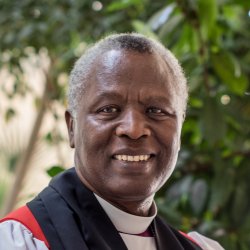
The two priests appealed their sacking to Archbishop Mbanda, who suspended Mugisha pending an investigation. He gave Bishop Augustin Ahimana of the nearby Diocese of Kivu interim oversight of the diocese.
According to a public letter issued by four of the Anglican Church of Rwanda’s retired bishops, Mbanda convened seven meetings of the Church of Rwanda’s House of Bishops to try to resolve the disputes between Mugisha and the two priests, without success. He excluded Mugisha from the meetings, a step the bishops described as “an uncanonical act.”
Mbanda then handed over the matter to the Rwanda Governance Board, a state agency charged with enforcing good governance principles in public and private institutions, on October 17, 2024.
The board is seen by some as a mechanism for social control by the nation’s ruling Rwandan Patriotic Front, which has been in power for the last 24 years. A 2025 report by the International Center for Non-Profit Law on civic freedom in Rwanda mentions numerous barriers to the work of non-governmental organizations in the country imposed by the Rwanda Governance Board.
Mbanda claimed in a letter to the board that “the reality is that we have not been able to resolve the issues; we are so divided on the issues.” He subsequently restored Kubwayo and Kabaragasa to their former positions.
The next month, Mugisha tendered his resignation as bishop in a letter that Mbanda said was shared only with his fellow bishops. Mugisha’s supporters allege that his decision was made under pressure.
On January 21, 2025, the Rwandan Investigation Bureau, a state criminal investigation police force, arrested the former bishop, on the same corruption charges alleged earlier by Kubwayo and Karagabasa. The two priests would eventually testify against him at his trial in the fall of 2025.
‘He Has Done No Wrong’
While Mugisha was in prison awaiting trial, retired Bishop Alexis Bilindabagabo sent a letter to the church’s bishops on February 19, posing seven questions about their handling of the dispute between Mugisha and the two priests. After receiving no reply, he issued a public letter, “The Truth Shall Set You Free,” on October 8 and circulated it to all the church’s clergy.
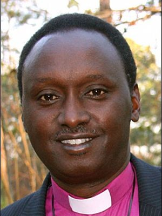
Bilindabagabo says in the letter that he visited Mugisha several times in prison and accompanied him to court hearings.
“What I saw and heard shocked and deeply saddened me. Seeing a bishop in handcuffs and having been in prison for nine months makes one think he must have committed a very serious crime. But when you attend the court sessions and hear the charges, you look for a crime and find none, because what he is accused of are ordinary responsibilities that bishops carry out daily, and which happen in all your dioceses,” he said.
“Dear bishops, what is happening to one of you seriously undermines the dignity of the episcopal office and casts a shadow over the good work you did when and while laying hands on him. It humiliates a father in front of his children when he has done no wrong,” he added.
Of the allegation that Mugisha’s grazing of cattle on church land was criminal, he wrote, “You know this is a common and acceptable practice in our church. Many of you have done it and are still doing it today—grazing, farming, even planting crops on church land is a common practice, not only in Rwanda, but in the whole region.
“Why are you not helping the prosecution to understand that this is not a crime, but a longstanding practice in our church? It is even more painful to hear that the pastor who accused him also had cattle grazing in that same field. Why was he not imprisoned as well?”
Mugisha’s wife, Jackline, has further claimed on Facebook that the 19 cattle associated with the charge were a gift from the people of the diocese presented to him at his consecration, a cultural token of their respect for his leadership.
“Who remembers what happened that day? Who was present? Do you remember the cows that arrived in a truck at the stadium?” she wrote on January 5. “The same people who had given them to us were the ones who took them to the church farm. What happened later, it became a crime.” A local elder who asked not to be named confirmed Mrs. Mugisha’s story in a conversation with TLC.
Archbishop Mbanda responded to the letter a week later at a press conference, affirming his confidence in the judicial system. “It’s not surprising for someone to be held accountable. People make mistakes, we are all human.”
He reserved harsh words for Bilindabagabo: “If there is a bishop who wants to act outside the Church’s guidance, his time is over. Some think that because they acted in a certain way, others should too, but that’s a misconception.”
“Someone once said that those who are not on the field never score a goal. You may cheer and even criticize those playing, but you can’t score if you’re not in the game,” he said.
Three days later, Bilindabagabo and three fellow retired bishops, including former Rwandan primate Emmanuel Kolini, responded to Mbanda in a second public letter, saying they stood together in affirming the truth of Bilindabagabo’s claims and asserting that “retirement does not exclude us from the fellowship and responsibility of being participants in the church.”
The letter included numerous criticisms of Mbanda’s leadership in the ecclesiastical process that was intended to resolve the conflict between Mugisha and the priests. In addition to describing Mbanda’s decision to exclude Mugisha as “uncanonical,” they say that “with such practices you breed (as shepherd of the Church) mistrust, confusion and disunity.”
They also criticize Mbanda’s decision to hand over the case to the Rwanda Governance Board and the prosecution, asking, “Why is he charged for actions that others among you have not charged for? Are the laws applied exclusively?”
“Since you have invoked the law, allow us also to remind you of the Church canons you have repeatedly violated,” they continue, asking for a meeting with Mbanda to discuss “the canonical law[s] that are being violated, and seek a peaceful resolution in order to avoid further harm to the Church.”
Mbanda has not responded publicly to the letter from the four retired bishops.
On October 30, the Muhoza Primary Court in Musanze issued its ruling against Mugisha, acquitting him of all charges except the illegal pasturing of his cattle on church lands. He was sentenced to serve three and a half years in jail.
In the meantime, two church leaders from the Diocese of Shyira, the Rev. Fabien Byiringiro and lay leader Japhet Rokundo, filed separate lawsuits against Archbishop Mbanda in Nyarugenge Intermediate Court in Nyamirambo.
Both lawsuits allege that Mbanda unlawfully leads the Church of Rwanda, as its current canons (issued in 2019) stipulate that the primate must retire at 65, but Mbanda, who has served in the role for nearly eight years, is 71. One lawsuit also accuses him of making unilateral decisions without consultations and seeks his suspension from office.
In an interview with IGIHE, Mbanda refused to comment directly on the lawsuits, but said, “I can only tell you one thing. I did not appoint myself. That’s one. Secondly, I did not lack anything else to do, nor did I have nowhere to go. And thirdly, we must thank God because sometimes He uses unexpected people or circumstances to take you exactly where He wants you to be.”
Hearings for the two lawsuits against Mbanda were scheduled for March 9, just after the primate was set to return from the Gafcon gathering in Abuja, Nigeria. But they have since been postponed until April, the fourth time of rescheduling. One priest in Shyira told TLC he doubts that the cases will be heard before Mbanda’s retirement.
‘It Has Destroyed Our Hope’
Meanwhile, the future in Shyira remains uncertain.
A diocesan priest reported to TLC that poverty has increased across the region as several of the diocese’s social welfare programs have become inactive and offerings have declined by more than half.
“We have been affected spiritually and economically the past one year,” he said. “The ongoing process of electing a new bishop has destroyed our hope and the future for the people of Shyira Diocese, without Bishop Mugisha.”
Marie Jeanne, a resident of Ruhengeri, the diocese’s see city, told TLC, “One of [Mugisha’s] landmark projects is the Asante Business Center, which remains incomplete, because the donors abandoned it in protest after the bishop was arrested and later jailed.”
Another local leader claimed that Mbanda and interim Bishop Ahimana plan to take out bank loans to finish the center’s construction, a step that Mugisha deemed as too risky, given Rwanda’s high interest rates.
Ahimana has also tried to steer the Diocese of Shyira toward electing a successor to Mugisha. A plan to hold an electing synod last December was tabled because of opposition within the diocese. A second synod, held on February 11, elected two candidates, the Rev. Emmanuel Mugiraneza and the Rev. Vital Manirakiza, both academics living outside the diocese.
In accordance with the Church of Rwanda’s canons, the House of Bishops is expected to meet this month to choose one of the two as Shyira’s next bishop.
The Living Church attempted to contact Archbishop Mbanda for comment on this story, but has received no response.

Daniel Sitole is a freelance journalist in Kenya. His stories have appeared in newspapers and magazines in many countries, including Canada, South Africa, the United Kingdom, and the United States.
