


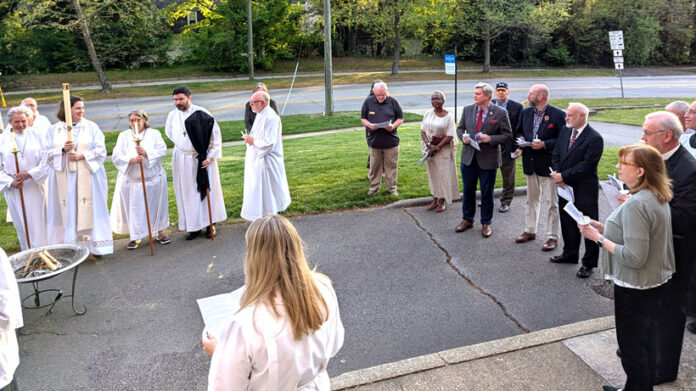
Last year, six Episcopal churches in our corner of southern Virginia advertised 37 services between Palm Sunday and Easter Sunday. The year before, it was 34. We did everything: the Proper Liturgies, Monday to Wednesday in Holy Week, Stations of the Cross, Tenebrae, and one shared Great Vigil of Easter. To someone seeing our collective Facebook posts or shared fliers at the coffee shop, we didn’t look like a dying tradition struggling to keep the lights on. We looked alive, full-throated, like we offered something worth people’s attention.
This didn’t happen because any one of our parishes is particularly large or well-resourced. It happened because we sat down together in late January, opened our calendars, and hammered out a schedule. We already live and worship near each other, so why not pool our energies in the holiest week of the year?
I’m writing to invite you—whether you’re clergy, a senior warden, a retired priest doing supply work, or anyone who loves your church and wants to see it thrive—try this. This year. Start now. Not because it’s easy, but because it’s faithful. Not because you have spare energy, but because this is the mission.
Why This Matters
When six churches collaborate to offer the fullest expression of the American Anglican liturgical tradition, our neighbors see something they might not otherwise notice. They see options. They see a tradition that’s vibrant enough to fill a week with prayer, music, and ancient ritual. For the person who drifted away years ago or who ended up in a nondenominational congregation that doesn’t observe the liturgical calendar, those abundant offerings communicate something: We’re still here, we’re serious about this, and there’s a place for you.
Some things simply require more than one small parish can muster. When I first held the Easter Vigil, most folks had never heard of this service. They had never had the personnel to do it alone. But for the past two years, we have collectively worshiped both with people who have never heard of it and with people who remember it from long ago. People are moved. People love it. People are excited to do it again.
Many of us were raised in a church culture that treated neighboring parishes as competition, but there’s something fundamentally wrong with treating our neighbors as rivals when we’re supposed to seek Christ in everyone.
Most important, we live in an age when it will probably never again be assumed someone is Christian or will participate in worship. Do we lament and slowly close shop? Or do we open our doors for worship as often and as loudly as possible? Fidelity to God demands that, from time to time, we offer worship in abundance. Why not during Holy Week?
Two years ago, when I held a Maundy Thursday service at noon, two people showed up—one from my parish, one from a neighboring church. The evening service? More than 70 people. Was it worth doing an extra service for those two people? It certainly was. All y’all have prayed that when two or three are gathered, Jesus will be in our midst. Worship is what’s most important. It’s who we are. It’s what we offer to the world.
‘But We’re Already Exhausted’
I know this objection because I’ve heard it every time I bring this up: Clergy are already stretched too thin. Organizing another set of things during Holy Week isn’t feasible. I hear you. I am solo clergy. My wife is solo clergy. We have two children under 4.
Yes, this is harder than doing everything myself. It means more to coordinate, more emails to send, more personalities to handle. It would be so much easier to do everything on my own at my parish. This isn’t an extra burden heaped on top of ministry. This is the work. This is the heart of what we’re called to do.
How to Do This
Start now. In late January or early February, send email to the rectors, vicars, senior wardens, and any retired clergy in your area. Cast the net wide—include churches you haven’t worked with before, churches you don’t know well, churches that might say no. The invitation is simple: Let’s plan Holy Week together so our communities will worship well. If you can lead worship but can’t coordinate, find a communicator. Then for you this is one 90-minute meeting instead of hours tracking people down.
Hold one planning meeting. Bring your calendars. Bring the list of all possible services. Work through the list together. Every participating church that doesn’t have regular access to clergy gets at least one service it otherwise wouldn’t have. Everything else is a matter of who’s willing to host what and which things will happen in multiple locations.
Some services, like Palm Sunday and Good Friday, will happen at every church—you’re just identifying who is offering what. Some services, like Tenebrae or a Monday Eucharist, might only happen in one location, but planning it together means all your churches may promote and encourage people to attend.
The Great Vigil of Easter is the one to do together. Bring participants from every community into the worship. Make them readers and acolytes and make sure every church brings banners. Light the new fire. Tell the old stories. Renew your Baptismal Covenant. Rejoice in the Resurrection as one body.
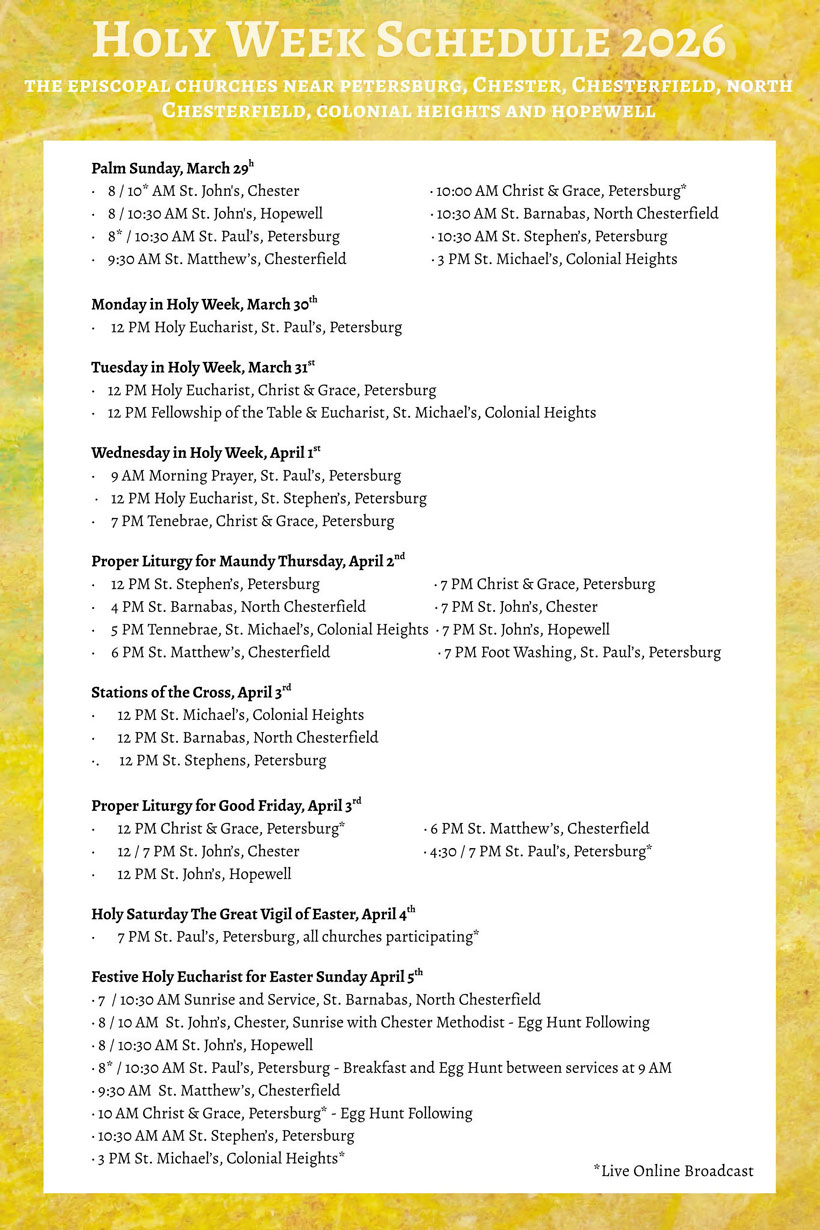 Advertise together. Whenever any of your churches promotes its Holy Week services—on social media, in bulletins, on fliers at the local library—include times and locations for all participating churches. Use a big poster if it’s five or six churches. Let the community see the full, abundant schedule. Let your neighbors see what it looks like when Episcopalians work together.
Keep inviting. Some churches won’t participate this year. That’s fine. Keep inviting them. Keep expanding, keep building connections. The goal isn’t to get everyone on board in the first year. The goal is to build something sustainable that grows over time.
Loop in the bishop’s office. You aren’t asking for permission, but the bishop will want to know about it, might be excited about it, and can pray for it.
The Call
This version of the Church, this branch of the Jesus Movement, is worth preserving. That might mean we are never again discrete, disconnected units three blocks from one another. This witness, these traditions, the beauty and depth of Anglican worship, are more important than anxiety about attendance numbers.
Worship is who we are. It is what we offer to the world, so try this. Try showing your neighbors that this way of worshiping the Lord is alive and well, and right in their back yard. Y’all come.

The Very Rev. Sam Sheridan is rector of St. Paul’s Episcopal Church in Petersburg, Virginia.
