


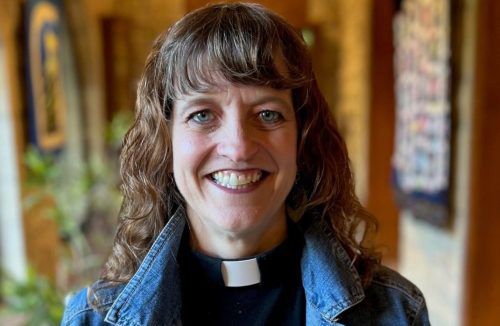
Episcopal Migration Ministry’s affiliation with the federal government’s refugee resettlement program ends in September, but its director stresses that its focus and mission will continue.
“We served our last clients in July,” said the Rev. Sarah Shipman, who has led the ministry since 2022. “We have been winding down our work with our affiliates, finishing up our final reporting. EMM staff will be able to focus 100 percent on the new direction as opposed to finishing up the federal program.”
The ministry’s roots in the Episcopal Church date to the 1800s. In 1988 it became one of 10 of federally recognized refugee resettlement agencies, eight of which are faith-based.
Between 1988 and 2025, the ministry has welcomed more than 110,000 refugees to the United States while helping 14,000 in gaining employment and helping more than 27,000 obtain medical and social services.
In January, an executive order from the Trump administration called for closing the refugee resettlement program. On May 12, Presiding Bishop Sean Rowe announced the ministry would not resettle white Afrikaners despite a government order, and that it was pulling out of partnership with the federal government as of September 30, the end of the government’s fiscal year.
While this action was sparked “as a result of everything that happened in the Trump administration,” Shipman said that, for the Episcopal Church, “the Afrikaners were the final straw.”
“Funding from the U.S. government completely funded our resettlement effort,” she said. “You cannot do refugee resettlement without being a federal contractor. The decision to terminate that contract meant that we lost all those funds.”
Nonetheless, Shipman said work has not stopped. “The most important thing for people to know is our commitment to supporting migrants has not changed just because we no longer are a federal contractor in the United States refugee resettlement.”
“While we determined we could no longer partner with the federal government in resettling refugees, our commitment to love and serve all migrants is unwavering,” said Rebecca Blachly, chief of public policy and witness for the Episcopal Church. “We will now focus on three areas: serving communities that help vulnerable migrants, addressing global migration, and protecting the rights of migrants through education and advocacy.”
“EMM has pivoted our mission away from refugee resettlement and our focus is serving communities by supporting ministries that are helping migrants and whether that is diocesan ministries or congregational ministries or others we have partnered with,” Shipman said.
Many tools are available to enhance migration ministry: seminars, resources, advocacy, education, and connections.
Weekly Zoom seminars, held on Tuesdays, began in January and have been heavily attended—up to 300 people in some sessions. Shipman said the seminars provide connections across the church for sharing effective resources, programs, and learning sessions.
The ministry’s Immigration Action Toolkit provides updated information about issues affecting immigrants and suggestions for how to support them. Action Alerts share information about policy changes.
Shipman encouraged individuals and congregations to make connections and “be a conversation partner” in the community. Working together, she said, is important “because none of us should start from scratch.”
The ministry is looking at the root causes of migration, such as poverty, violence, and climate change, starting in global places where there is an Episcopal or Anglican presence.
“We are also addressing global migration through our partners in the Anglican Communion across the church in places outside the U.S. and in partnership with organizations that the Episcopal Church has worked with for a long time, including UNHCR (United Nations High Commissioner for Refugees).”
Shipman says the ministry’s long-term goal is “to understand what the church is engaging in across all the dioceses and do so from the lens of what is the most helpful to them.”
Shipman cited current activism throughout the church, including the Diocese of Massachusetts Bishop Julia Whitworth’s support for Hondurus-born Blanca Martinez at a 500-person rally before an ICE appointment. Martinez is now allowed to remain in the United States for a year.
In an uncertain and rapidly changing environment, Shipman also urged caution. “I think we have to be strategic in the work that we engage in and the messages that we convey because often, in trying to help people by speaking out or making statements, we inadvertently can put those people we are serving in a more vulnerable position. We want to make sure that everything that we are doing comes from a place of advocacy, support, and protection for the people we are trying to serve.”

Neva Rae Fox is a communications professional with extensive Episcopal experience, serving the boards of The Living Church Foundation, Bible and Common Prayer Book Society, Episcopal Community Services of New Jersey, and others.
