


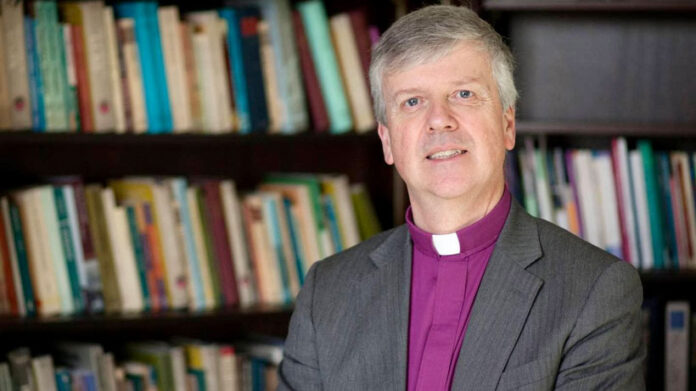
Two recent changes in the Church of England’s House of Bishops give a glimpse of the personalities who comprise that body.
First was the harrowing loss of Bishop Andrew Watson of Guildford on March 3 at 64. He had led Guildford since 2014.
On February 10, Watson announced that he had inoperable cancer of the pancreas. Much earlier in his life, Watson was one of the many boys who were beaten by barrister and serial abuser John Smyth.
The Archbishop of Canterbury expressed her sadness upon Watson’s death.
“It is with great sorrow that I received news of Bishop Andrew’s death. Andrew was a man of deep Christian faith who lived his life in the service of Christ and others. In the face of death, he demonstrated a calm reassurance of God’s saving grace,” Archbishop Sarah Mullaly said.
“Over four decades of ministry, Andrew made an enormous contribution to the life of the Church of England—and, through his concern for Anglicans and other Christians around the world, the global church. He was a gentle man and generous with those who held differing theological views. He will be greatly missed, not just by his family and friends, but by the whole church.
“At this time of grief and loss, I hold Beverly and their sons and daughters in my prayers, asking that God would comfort and strengthen them. I pray too for Andrew’s friends, colleagues and all those whose lives he touched. May Andrew rest in peace and rise in glory.”
The Rt. Rev. Paul Davies, Bishop of Dorking within the Diocese of Guildford, praised the bishop with whom he served.
“Whilst his family mourn the loss of a much-loved husband, father, grandfather, son and brother, we mourn the loss of a much-loved diocesan bishop—as well as an inspiring fellow disciple, dear brother in Christ, precious friend and special colleague,” Davies wrote in announcing Watson’s death to the Diocese of Guildford.
“For me, personally, he has taught me so much about how we should live and, in these past months, about how we should die,” Davies added.
In the week before Watson’s death, Guildford Cathedral hosted an all-day prayer vigil that attracted almost 2,000 clergy and lay people to show support and pray for Watson and his family.
Watson revealed his past encounter with Smyth in a statement he issued in 2017. “I am one of the survivors of John Smyth’s appalling activities in the late 1970s and early ’80s. I am also one of the bishops in the Church of England,” he wrote.
“My own story is certainly less traumatic than that of some others. I was drawn into the Smyth circle, as they were, and the beating I endured in the infamous garden shed was violent, excruciating and shocking; but it was thankfully a one-off experience never to be repeated.”
He warned against using abused parties as pawns in church debates. “Abusers espouse all theologies and none; and absolutely nothing that happened in the Smyth shed was the natural fruit of any Christian theology that I’ve come across before or since. It was abuse perpetrated by a misguided, manipulative and dangerous man, tragically playing on the longing of his young victims to live godly lives.”
Watson was an important leader among evangelicals in the Church of England, and developed strong connections with Anglicans across the Communion. He was also a member of the Living Church Foundation.
The church drew again from its evangelical heritage in choosing the Rev. James Treasure to serve as Bishop of St. Germans in Cornwall, a role within the Diocese of Truro. Treasure, who grew up in the Church of England, served as a Free Church pastor before returning to his boyhood church and becoming a priest in 2017. The church announced his appointment on March 9.
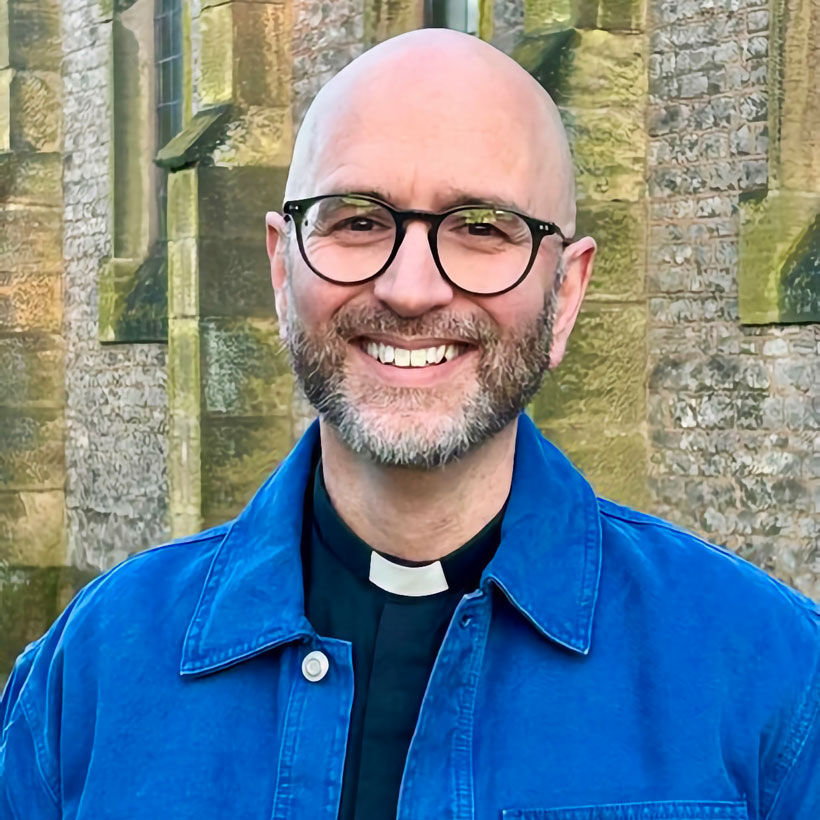
He is now vicar and Resource Church rector at St. Thomas and St Luke’s (also called “Top Church”) in Dudley. The Resource Church role meant he was responsible for four additional churches as he still led St. Thomas and St. Luke’s.
“Our Story,” a page on the parish’s website, explains its rescue from an imperiled state: “In 2017 the future of Top Church was looking very uncertain: with the congregation in gradual decline for a decade, and the iconic building being placed on the ‘at risk’ register. Thankfully, the Bishops of Worcester and Dudley decided to seize this opportunity by creating a new resourcing church. Over 7 years, from 2018 onwards, Top Church will receive £2.5m from the Church Commissioners in order to start afresh. Since those early days in 2018, and with only a handful of people, we have grown to around 180 people and have begun resourcing other local churches in Dudley.”
Top Church supports sexual minorities and explains that role simply, under the heading of Dignity: “To give and treat all people with dignity no matter their age, gender, health, race, marital status or sexuality.”
Top Church lists seven other of its qualities as a parish: worship, openness, aspiration, community, formation, hope, and a voice.

Douglas LeBlanc is an Associate Editor and writes about Christianity and culture. He and his wife, Monica, attend St. Matthew’s Episcopal Church in Henrico, Virginia.
