


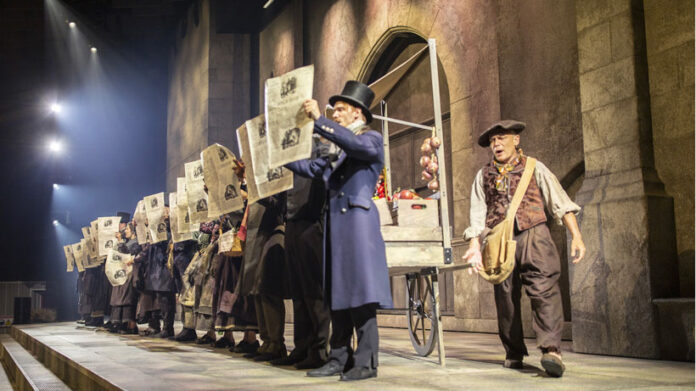
Dozens of journalists gathered in December at the Athenaeum Center for Thought & Culture in Chicago for one of the first public previews of a musical produced by Frasier star Kelsey Grammer.
Bernadette, the Musical has set its sights high for its North American debut. Having completed a successful European tour of more than 300 shows, the musical will have its first American staging in February; its international popularity has earned it a national tour, which is unusual for a first-time musical.
It’s one of the few major touring musicals grounded in Christian history.
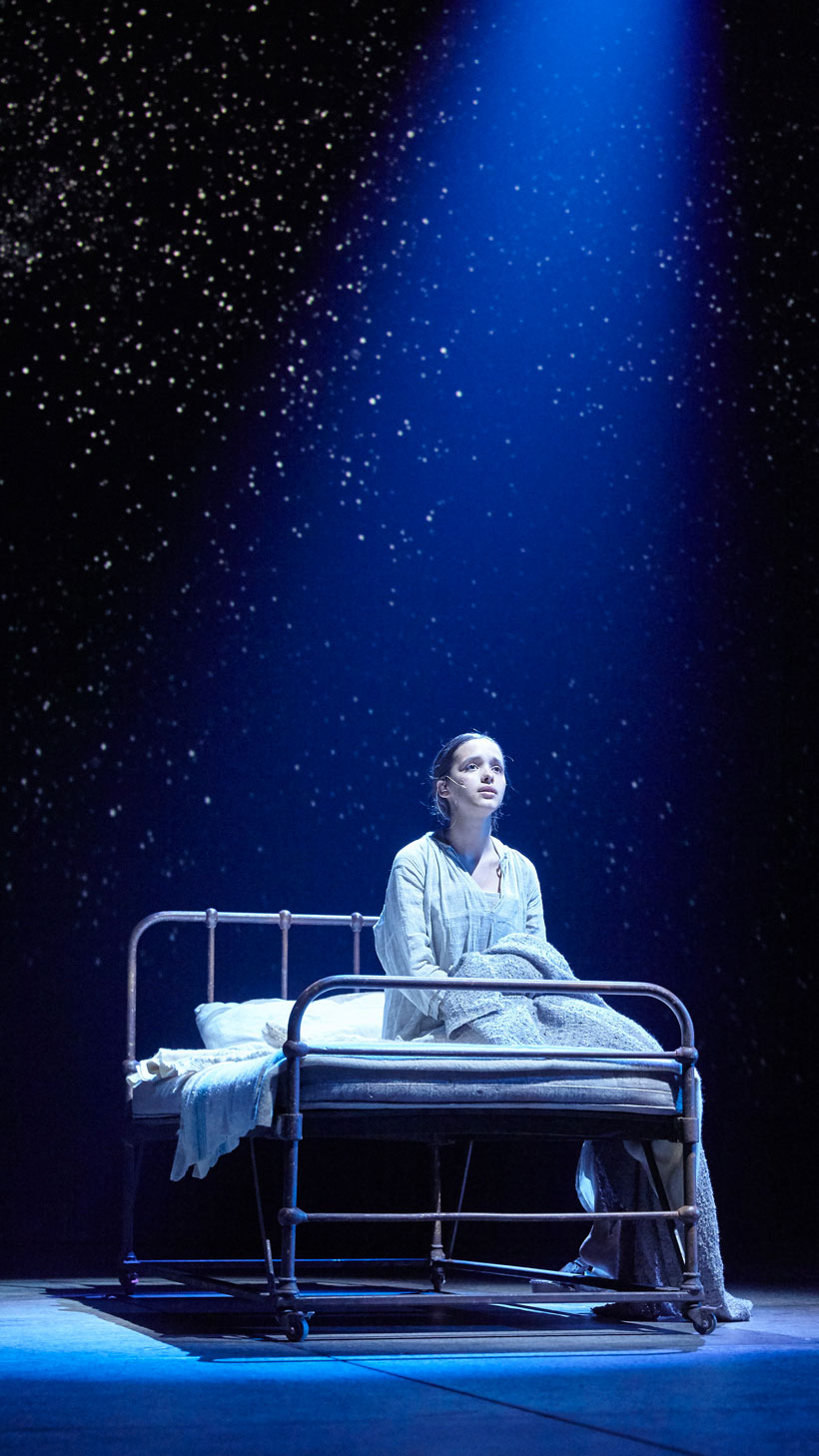
The musical focuses on the life of St. Bernadette Soubirous, SCN, a Catholic teenager who claimed to see multiple visitations of the Immaculate Conception at a modest grotto in Lourdes, France. Her life and claims have been immortalized in books and films, including the beloved film The Song of Bernadette (1946). The Sanctuary of Our Lady of Lourdes remains one of Catholicism’s most popular pilgrimage sites in western Europe. St. Bernadette was canonized by Pope Pius XI in 1925, and the Marian apparition is one of 16 approved by the Vatican.
Set between Bernadette’s seeing the apparition and her decision to become a nun, the musical explores the curious space of doubt and faith. The teenager Bernadette is challenged by both her priest, Dominique Peyramale, and the skeptical Commissioner Dominique Jacomet, pressed to recant her claims or prove them. As the Nigerian-Irish reviewer O’Maria Akpati described the musical for Catholic Link, it is a drama of “public scrutiny, persecution, and ridicule,” intending to reveal “the soul of the girl who bore it.”
The most curious aspect of the musical adaptation, though, is how little Catholicism drives this production. While the North American tour is sponsored by groups such as Young Catholic Professionals and Bayard Faith Resources, the show’s creatives, actors, and producers are predominantly non-Catholic. Only a few of the cast and crew are Christians. A handful grew up in religious homes, but a public-relations agent was the only practicing Catholic I met at the media gathering.
The atmosphere created by nonbelievers exploring a Catholic saint without explicit devotion spoke to a curious approach. There was little desire to assent to Catholic teachings, but the cast and crew’s curiosity lends a fascinating, multidimensional perspective on authority, belief, uncertainty, and tribulation.
“It’s not up to us to decide if it’s true or not, whether what she saw is what she saw,” said actor Thomas James, who plays Father Peyramale. “You have to come into it and understand that she was 14, she saw something, and she’s not a liar. The world views her as a saint, but our show shows you her humanity as a child. She saw something, and there is a list of people who didn’t want to believe her because of tradition, structure, rules, and all that. Even Father Peyramale takes four or five scenes to start believing her, and there’s dissonance to trust and believe her. If the audience is receptive to seeing the story, it’ll be great.”
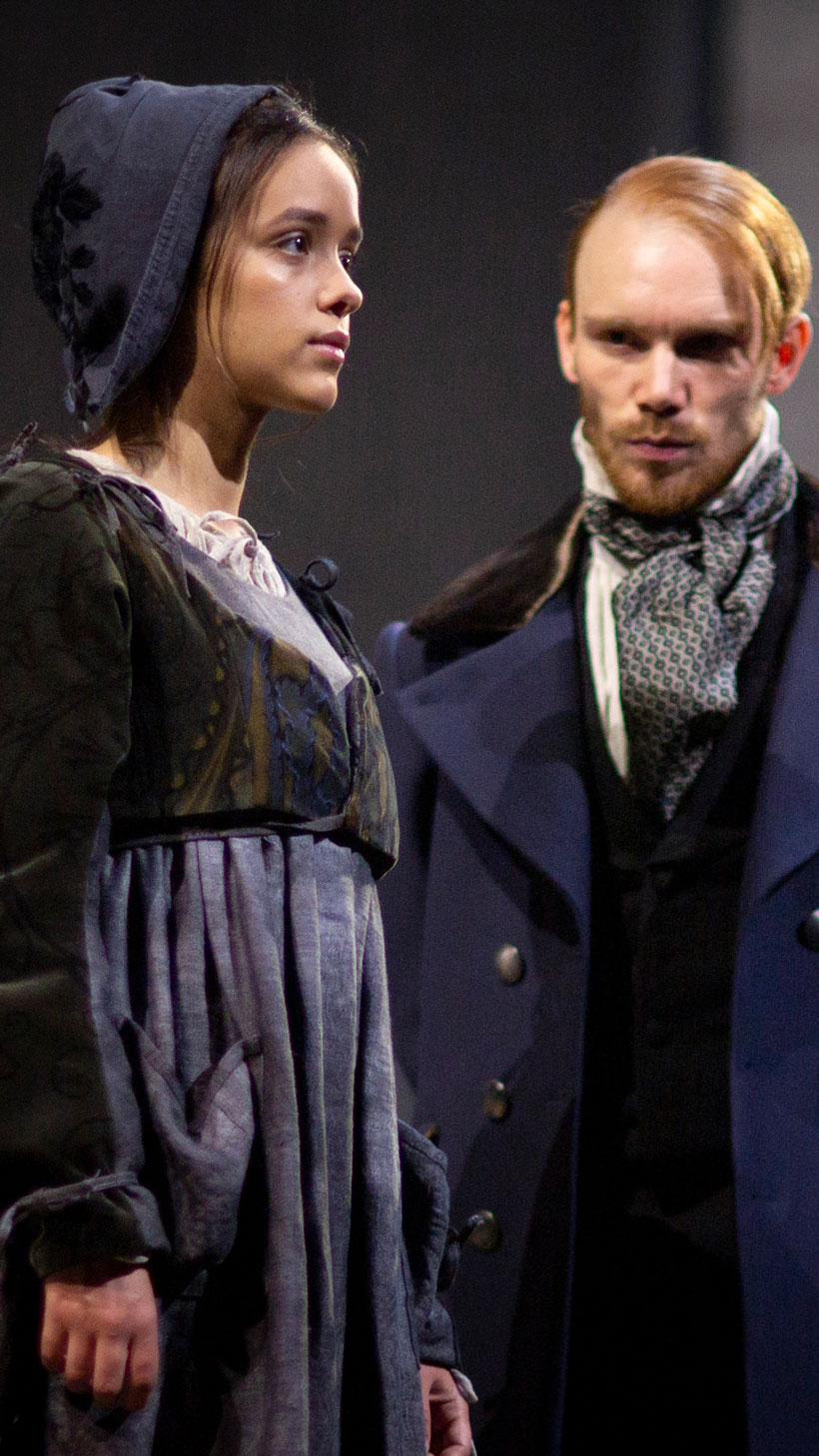
Actor Steven Martella, who plays Commissioner Jacomet, put it similarly. “I’m reading The Song of Bernadette right now, which was then made into a 1943 movie. Franz Werfel was a Jewish author in Nazi Germany who was outspoken against them, and it put a target on his back. He had to escape to France and then Lourdes, where he was welcomed by the town.
“He went to the grotto and the basilica, and he was so moved by everything he saw, he said, ‘God, if you find me passage to the United States, I will sing the song of Bernadette.’ So you have a Jewish man who wrote one of the most popular religious historical novels ever written about a Catholic saint. That’s what this show is to me. It doesn’t matter your background. It’s about the humanity of this little girl. If you’ve ever experienced tribulation—if you’ve ever felt like the entire show is against you—this show is for you.”
Grammer is the best-known person attached to the show, and he is an evangelical Protestant. He said in his keynote speech that he collaborated with former Vatican Museum director Mark Haydu to help distribute the show in North America. Grammer was astonished by the saint’s incorrupt body and her life: “It’s an extraordinary thing. You can’t turn your back on this. Nobody went in there and sprayed her with epoxy. It’s a real thing.”
Grammer’s interest in the musical comes mainly from his recent spiritual awakening after the success of Jesus Revolution, in which he portrayed pastor and evangelist Chuck Smith. “Man’s search for faith on this planet is part of why we’re here,” Grammer said. “Part of our understanding of being a human being is to figure out where we fit in the universe and what our relationship is like to the creator of that universe, and I’m delighted to be here to take the story further for people.”
Lead producer Pierre Ferragu grew up in a French Catholic family that traveled to Lourdes on pilgrimage and felt a special devotion to that holy site. But he too was quick to downplay the show’s piety.
“You don’t need to be religious at all to appreciate the character of the little girl,” Ferragu said. “In her innocence and lack of education, she wasn’t quick or smart. But she had an amazing character. And that’s a beautiful ground for artists to interpret her.”
The show’s author/director, Serge Denoncourt, speaking with a thick French-Canadian accent, was very forthcoming about not being a Christian.
“Ten years ago, somebody called me to ask if I’d like to direct a show about Bernadette de Lourdes, and I said, ‘No way! I’m not interested, no.’ They called me again and again. I’m not a believer, but they said, ‘Would you like a free trip to Lourdes?’ Nothing convinced me there I had to do the show.
“And finally, I went to a center where they had her letters and things—really interesting, historically. And I love history. I came across a book handwritten by Commissioner Jacomet, who interrogated her. You have all the questions and answers, and I was like, ‘Wow!’ I asked where in the book she claimed to see the Virgin Mary, and they said, ‘Nowhere!’ That’s becoming interesting. From there, I fell in love with Bernadette.
“It’s a beautiful spiritual place, but I knew little about the young girl. That was almost the part of the story that was least appealing. She was very poor and died young. She was very sick. She was barely going to school. She didn’t know how to read. And she had such a hard time throughout the whole story. I didn’t think she could be the center of a beautiful play. And when I watched this one, I thought there was something amazing here. What she said touched hundreds of millions of people.”
Savvy readers may notice that the play’s title downplays its title character’s sainthood, which is by design. As Denoncourt notes, he wanted to explore the human being behind the saint. When I asked if he’d taken inspiration from Song of Bernadette, he laughed the movie off as Hollywood fakery that downplayed the human being.
“It’s very famous and a good movie, but it’s all false,” he said. “It’s all Hollywood treatment, and that’s why I didn’t work with any books or movies, just the archives. I went back to the historical truth.
“The show isn’t about the saint. It’s about the little girl before she became a saint. She’s fantastic! She’s a teenager. She’s suffered. She’s heard voices. She isn’t trying to convince anybody. Whatever you think of that story, she did something amazing and important, and she’s just a fun little girl to meet. When you see those movies about saints, they are always [acting like] saints. She was not. She had a big temper. She was fighting with her mother. She was a real teenager as we know today.”
Bernadette, the Musical will run in Chicago from February 12 to March 15. The tour will encompass Atlanta, Boston, Charlotte, Dallas, Detroit, Houston, Nashville, New Haven, Philadelphia, Phoenix, Portland, and Tampa.
Tickets are available at bernadettethemusical.com.

Tyler Hummel is a freelance writer based in Lake Geneva, Wisconsin.
