


James Otieno trusted the high school teacher who invited him to help turn pages during a recital at Nairobi’s All Saints’ Cathedral. That night in December 1979 changed his life forever.
“Apart from teaching me at the Starehe Boys’ Center, he was also an organist at the cathedral,” Otieno told The Living Church. “His invitation interested me in the organ. Seeing him play convinced me that I too could do it. My classes in music gave me increased clarity and confidence in my choice.”
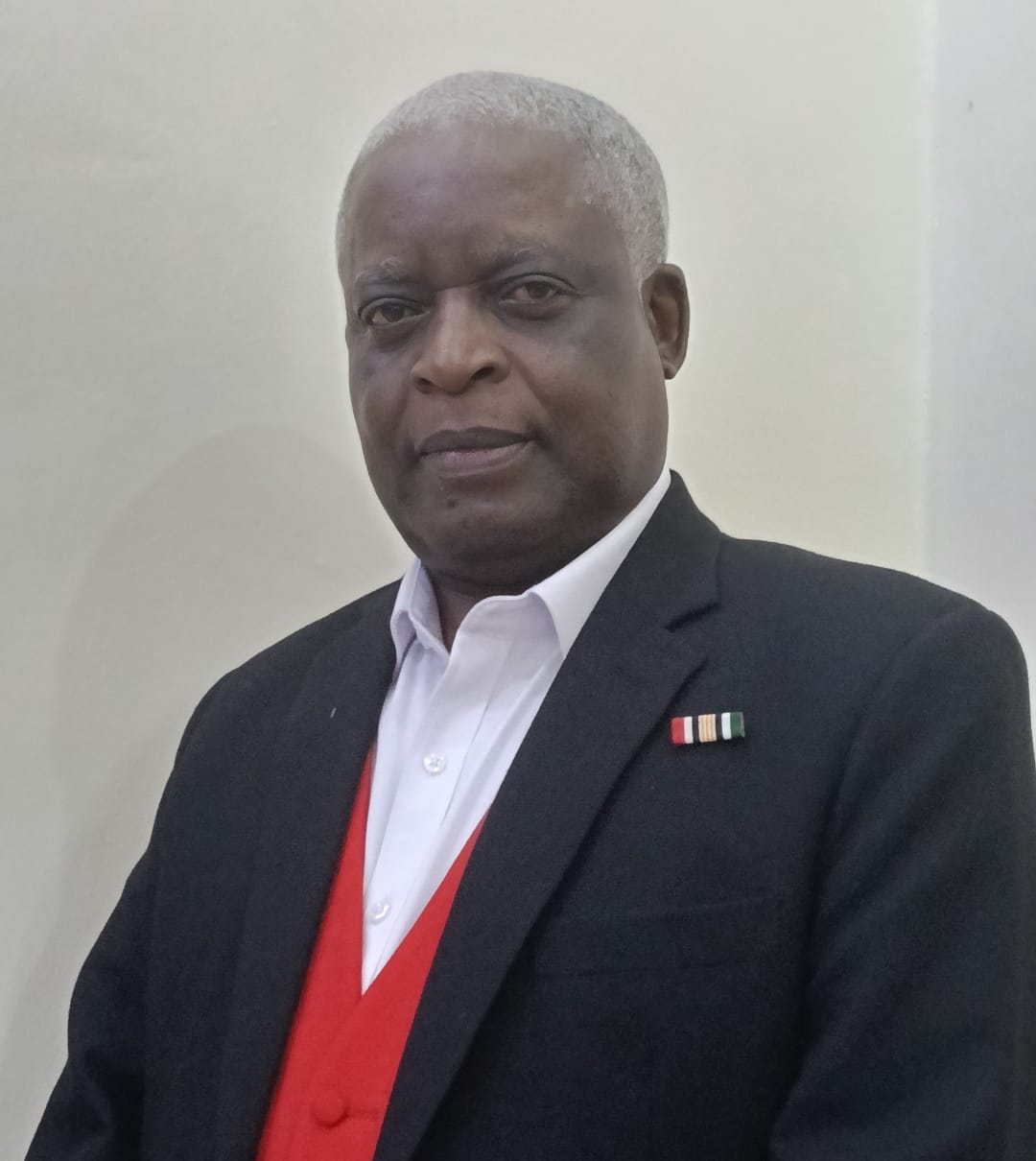
In no time, he was playing the organ for various Anglican churches across Kenya’s capital, before settling down at St. Stephen’s Cathedral along Nairobi’s Jogoo Road, where he has been on the bench for the past 40 years.
In that time he has observed growing tension in the church between traditional Anglican choral music and contemporary praise and worship.
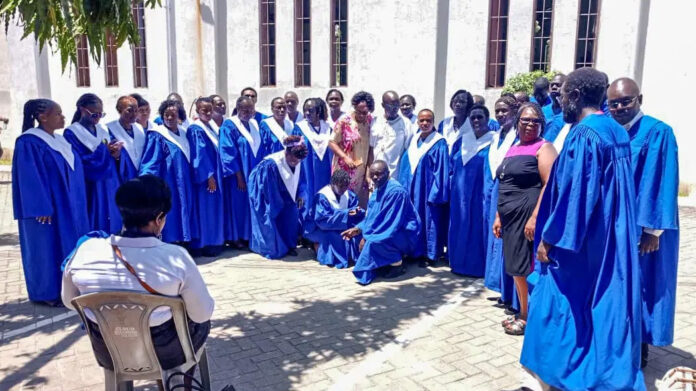
“I noticed a gap,” the 67-year-old told TLC at a choir directors’ workshop he led on February 5 at the Cathedral of the Good Shepherd in Nakuru, Kenya. “There was an overemphasis on praise and worship, yet there was a desire within congregations for hymns. Choristers needed to learn how to read and write music. This is a much deeper undertaking,”
The cathedral will be the host next October for the International Hymn Festival, which Otieno founded 12 years ago. Held initially at St. Stephen’s, the event has since rotated to Tanzania and Uganda.
The training workshop on February 5 drew 138 choir directors from across East Africa, many of whom plan to bring their choirs to learn together and compete at next October’s event.

Last year’s main festival, in Mombasa, included members of 74 choirs, who attended workshops on worship and mission, the liturgical seasons and colors, Anglican chant, choir management, the Anglican musical tradition, and emerging issues affecting music ministry. There were also many services and group training sessions on musical performance.
Speakers and adjudicators for the choir competition include distinguished East African musicians as well as senior musicians and organists from some of the United Kingdom’s historic cathedrals.
Otieno’s vision birthed the festival and he has footed its expenses for the last decade, including covering the costs of visas, tickets, and accommodation for international visitors, as well as a safari in the African wild.
He has been grateful to lead the effort, but is concerned about its sustainability.
“IHF is an idea, not an organization. It is owned by churches across East Africa. It is in the church. I don’t own it. I want to get out of direct administration so that churches can run it. I can’t do it forever. It cannot die. Everyone knows how it works. Bit by bit, I want to eventually pull back. The idea is to create a hosting team. Every hosting church should have a hosting team to deal with all aspects of the festival,” he said.
“Our syllabus includes a set hymn, choice hymn, an anthem, psalm, quartet (small choir), trios, duets, and solos. I set the music myself. I do the research. I will keep assisting with this, if required. But serious ownership by the church is the goal right now.”
Otieno is a keen student of Germany’s historic Bayreuth Festival, a five-week series of annual performances, which has a checkered history with government power. It makes him wary of entanglement with East Africa’s dicey politics.
“I try not to get entangled into some debates. Instead, I create spaces to address emerging issues,” he said. “There are endless possibilities when we come together to sing. A solution to some of the issues facing our region could come from IHF. The lessons are so personal, including resources and where to find them. But one has to first want to do it.”
Otieno’s efforts are appreciated by other music directors.
Anne Amutos, the musician at St. Paul’s, Katuso, in the Church of Uganda’s Namirembe Diocese, has followed Otieno to 10 festivals. She believes the festival is deeply encouraging for traditional Anglican musicians from across East Africa.
“Choral music has lost value in Uganda to an extent that you find some clergymen will ask for one or two stanzas of a hymn, yet allocate half an hour to praise and worship. Choristers end up wondering why they should bother practicing. As choir directors, we don’t always have a say in some congregations, but we are witnessing a breaking of barriers with the participation of clergy at this workshop. This is healing rifts,” she said.
“Meeting new faces from different countries is also a blessing. For example, we are softer, yet Kenyans are louder, but we share experiences in music. While staff notation was weak in earlier years, we are all now growing.”
Edward Ouko of St. Stephen’s Cathedral in the Diocese of Maseno South in Kenya praises the growth that the festival has seen.
“I first participated in the fourth edition, held in Nairobi. It was a moving experience alongside our peers from across East Africa. People learn from different choirs how to execute music in church,” he said.

Bishop Antony Mambo of Nakuru told choir directors in his sermon at the workshop that they have a crucial spiritual ministry.
“You are not just music leaders. You are spiritual gatekeepers. When you lift your baton, sometimes you think you are controlling music, but you are opening people’s hearts. When you choose the songs to sing in church, you are not doing it for that day’s entertainment, you are shaping the theology. Whatever you tell us to sing and lead us in singing will shape what we believe in our lives. It will definitely touch people’s hearts,” he said.
“Some of us never hear the sermon that was preached by the bishop or clergy, but will go home with the song that was presented by the choir that day. We are important people. But we should be cautious in what we do. You need to be sure that you are shaping the theology. When you train voices, you are building worshipers. God has entrusted you with the sacred ministry of leading people into his presence through singing. Excellence honors God. God desires beautiful worship, not careless noise.”

Jesse Masai is TLC’s East Africa correspondent, a longtime journalist and communications professional who has worked in South East Asia and the U.S., as well as in his native Kenya.
