



“I have decided to stick with love. Hate is too great a burden to bear.”—Dr. Martin Luther King Jr.
This week is one that will stick with us. It included the anniversary of the 9/11 terrorist strikes, a school shooting, and a political assassination—all evidence that the hate that’s so prevalent in our country is indeed “too great a burden to bear.” And if all that doesn’t convince you that Dr. King was right, witness the screaming argument that broke out in Congress over how best to remember Charlie Kirk.
I watched a lot of interviews with famous people in the last few days about the shooting of Kirk. The one that stuck with me was one with Patty Davis. She is the daughter of Ronald Reagan and knows too well the havoc wreaked by gun violence. “It’s not helpful for famous people to say that’s not who we are in the U.S.,” she said. “All the evidence says that it is indeed who we are.”
As we wrestle with what’s gone wrong in our nation, I can’t help but think of this remark by Dr. King. As difficult as love can be, the toll taken by hate is so great that we, as individuals and as a people, can’t bear it. Hate makes us suspicious of our neighbors near and far. Hate makes us value being right at the expense of our relationships. Hate makes our stomachs hurt and our minds close. Hate is too great a burden for both the hated and the hater.
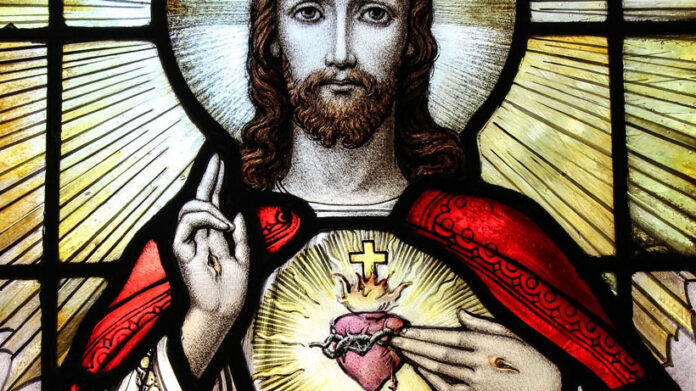
So what can we do? I think it starts with Christians. We are supposed to be disciples of Jesus, which means we pattern our lives after him. There is an old Jewish blessing: “May you be covered by the dust of your rabbi.” In other words, you should stick so close to your teacher that you are covered by the same dust that covers your teacher.
In the past few years, as our cultural dialogue has become so toxic, I have been reading the four gospels repeatedly because the best way I know to become like Jesus is to learn about him. I am no theologian or historian, but I have noticed several things about Jesus: he never is impatient, he never jams his thoughts down anyone’s throat, he never belittles the marginalized, he never calls down the powers that be (in his case all the angel armies) to overcome those who are trying to hurt him. I could go on, but it’s clear that the life of our Lord is in great contrast to the hate spewed by various current factions in our country.
Several years ago, I taught a seminar on Dr. King at Tennessee State University, and I invited John Seigenthaler to speak to my class about MLK. He was a journalist who eventually became editor and publisher of The Tennessean in Nashville. Seigenthaler left journalism briefly in the 1960s to become the administrative assistant for Robert F. Kennedy, then the Attorney General of the United States.
Mr. Seigenthaler worked closely with RFK on civil rights and was present at many key events in that struggle. The events he witnessed were impressive, but I will never forget his answer to a student who asked him to describe MLK in one word. Without hesitation, John Seigenthaler said, “Love.”
“King really believed in nonviolence, it wasn’t just something he talked about,” he said. “I saw him spit on, cursed, hit, jailed, and much more and never once did he strike back with violence or spew poisonous words. He always reacted with love.”
Dr. King’s lesson in love came straight from Jesus. So what does love look like? First, we look at the life of Jesus so closely that we get his “dust” on us. Second, Paul’s description of love in I Corinthians is quite expansive:
Love is patient, love is kind. It does not envy, it does not boast, it is not proud. It does not dishonor others, it is not self-seeking, it is not easily angered, it keeps no record of wrongs. Love does not delight in evil but rejoices with the truth. It always protects, always trusts, always hopes, always perseveres.
Love never fails. But where there are prophecies, they will cease; where there are tongues, they will be stilled; where there is knowledge, it will pass away.
And so, like Dr. King and Jesus, I have decided to stick with love. Our country has already seen the despair, the destruction, and the death that hate has borne. Christians know better than anyone how far humans have fallen; yet disciples of Jesus are those who believe that “we love because he first loved us.” My prayer is that Christ would so indwell us that his love is what we stick with.

Marcia Hotchkiss is program director of The Abbey in the City in Dallas. She recently wrote Hope-Peace-Love-Joy: An Advent Devotional (Bible Study Media Inc.) with Gilda Hurst.
